Originally published 13 August 2026. This educational article reflects its publication date; check current rules and suitability before taking action.
You are planning to start a SIP. You open a mutual fund document and notice a colourful meter with an arrow pointing towards words such as “Moderate,” “High” or “Very High.”
What does this meter mean? Should you avoid a fund marked “Very High”? Does “Low Risk” mean your money is fully safe?
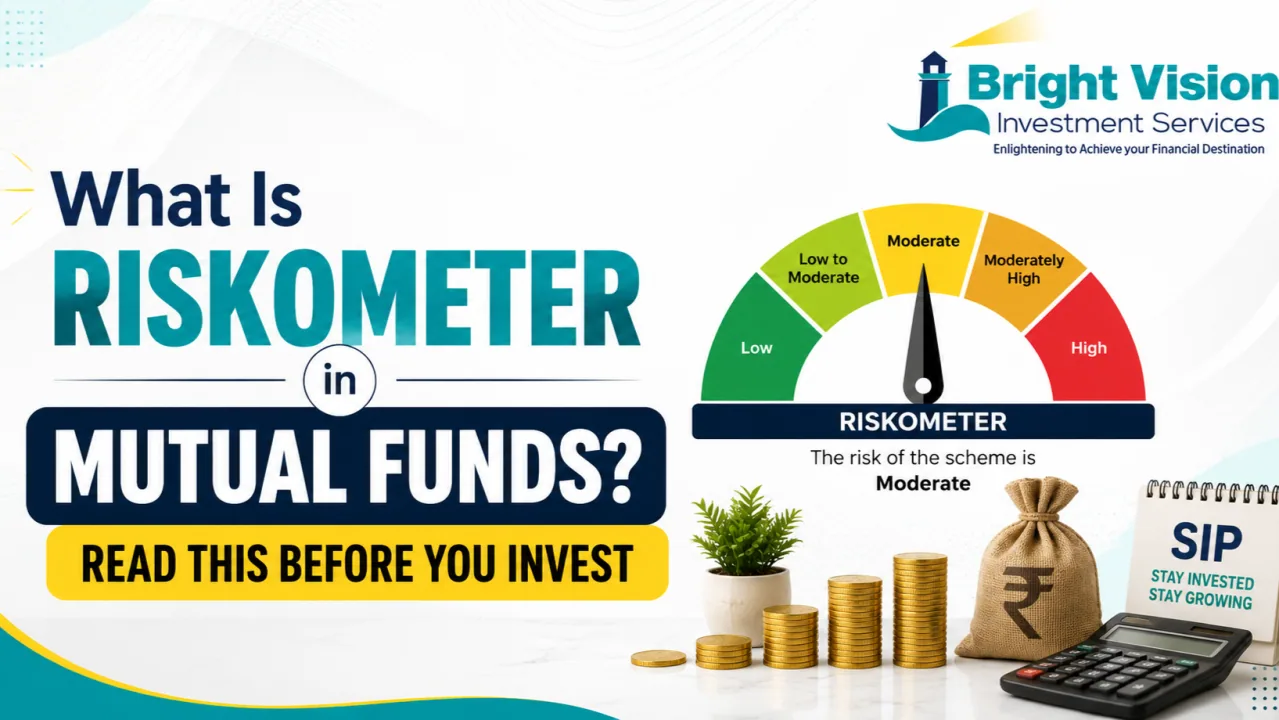
This meter is called the Riskometer.
The Riskometer in mutual funds is one of the first things every investor should check before investing. It gives you a simple view of the level of risk linked to a mutual fund scheme. It can help SIP investors, business owners, NRIs and families understand whether a scheme may suit their comfort level and financial goal.
However, the Riskometer is only a starting point. It does not tell you everything about a mutual fund, and it does not promise how the fund will perform.
Let us understand it in very simple terms.
What Is a Riskometer in Mutual Funds?
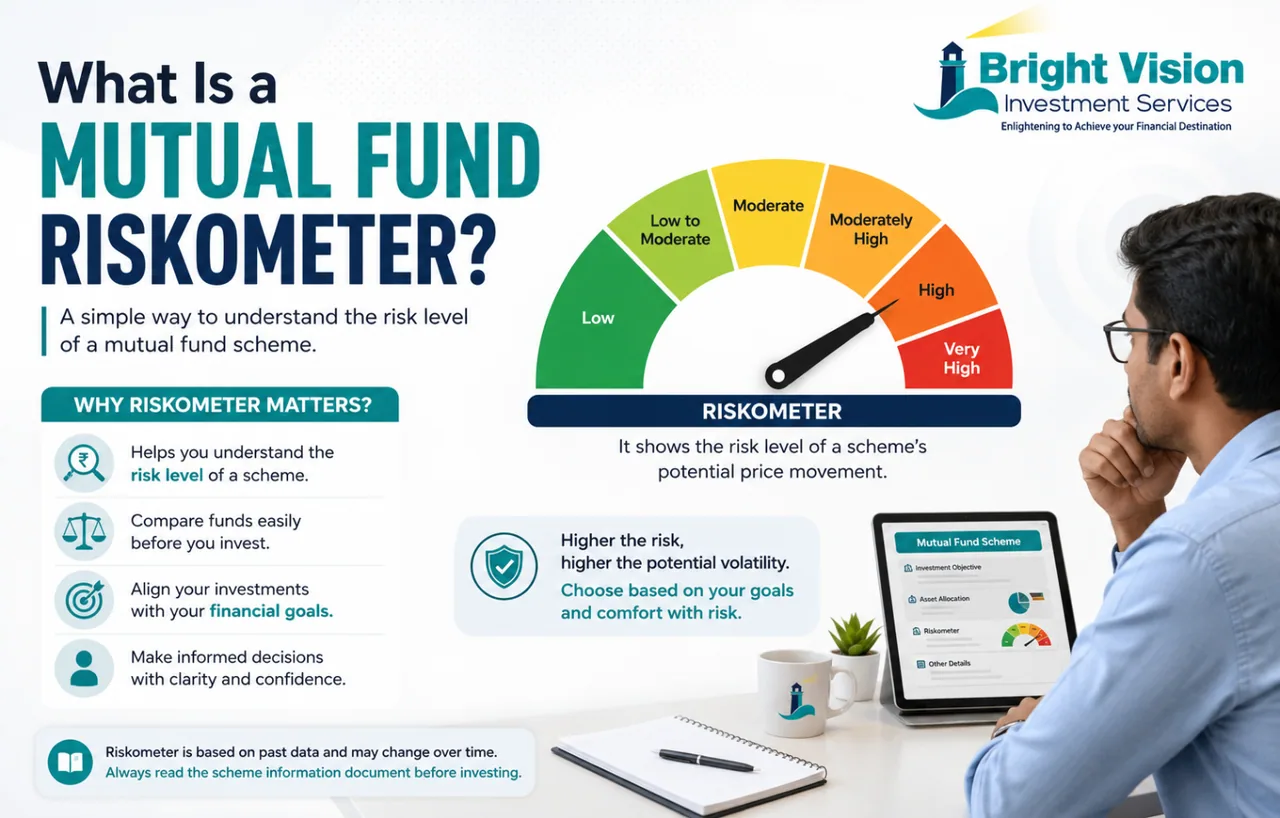
A Riskometer is a visual tool that shows the risk level of a mutual fund scheme.
The Securities and Exchange Board of India, commonly known as SEBI, requires mutual fund companies to display the Riskometer for their schemes. It helps investors understand how much risk may be involved before they invest.
According to SEBI’s investor education information on the Riskometer, it gives investors a simple view of the possible risk in a mutual fund scheme, from low risk to very high risk.
Think of it like a speed meter in a vehicle.
A speed meter tells you how fast the vehicle is moving. In the same way, a Riskometer tells you the broad level of investment risk linked to a mutual fund scheme.
It does not tell you whether the fund is “good” or “bad.” It only helps you understand the level of risk you may be taking.
Why Was the Riskometer Introduced?
Mutual funds invest in different types of assets. Some invest mainly in shares, some in bonds, some in money market instruments and some in a mix of assets.
Each type of investment carries a different level of risk.
For example, a fund that invests mainly in stocks may face greater price movement than a fund investing in very short-term debt instruments. Even within equity funds, a small-cap fund may behave differently from a large-cap fund.
Without a simple guide, a first-time investor may find it hard to understand these differences. The Riskometer was introduced to make this information easier to see.
It helps investors:
- Get a quick idea of a scheme’s risk
- Compare the scheme’s risk with their own comfort level
- Ask better questions before investing
- Understand that every mutual fund carries some level of risk
- Avoid choosing a scheme only because of recent returns
The Riskometer also supports better disclosure. A mutual fund company must show investors where a scheme stands on the risk scale.
What Are the Six Riskometer Levels?
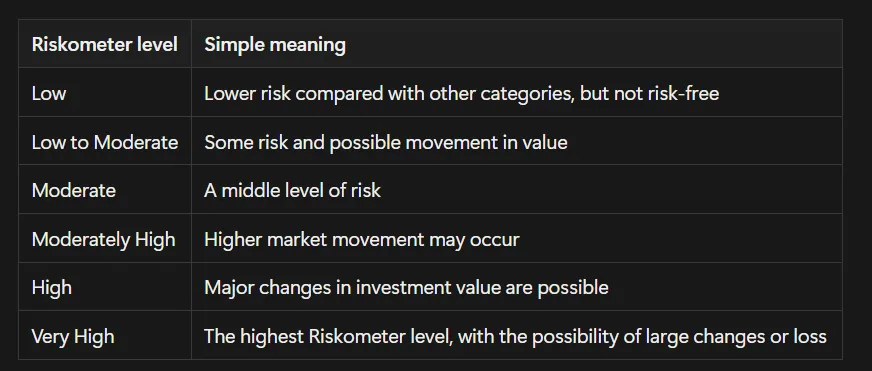
The Riskometer has six levels. Each level shows a different degree of risk to the investor’s principal.
1. Low Risk
A scheme in this level carries a relatively low level of risk compared with the other Riskometer categories.
Such schemes may invest in instruments with lower price movement or very short maturity periods. However, “low risk” does not mean “no risk.”
The value of the investment can still change. Investors should read the scheme documents before making a decision.
2. Low to Moderate Risk
This level is slightly above low risk. The scheme may carry some changes in value due to interest rates, market conditions or the type of securities held.
It may be considered by investors who do not want large market movements, but the scheme must still match the investor’s goal and time period.
3. Moderate Risk
A moderate-risk scheme may have a wider mix of investments or factors that can cause noticeable changes in value.
An investor should not select it only because the word “moderate” sounds comfortable. The fund’s asset mix, investment plan and expected holding period should also be checked.
4. Moderately High Risk
Schemes at this level may face stronger market movement. Some hybrid funds and other market-linked schemes may fall under this level based on their portfolios.
Investors should be ready for changes in the value of their investments. They should also check whether they have enough time to remain invested through different market conditions.
5. High Risk
High-risk schemes can experience major rises and falls in value. They may have a large exposure to equity or other assets that carry a higher level of market risk.
These schemes may not be suitable for money required in the near future. Investors should understand the possibility of loss and not depend only on past returns.
6. Very High Risk
This is the highest level on the Riskometer.
Many equity-oriented schemes, including certain sector, thematic, mid-cap or small-cap funds, may fall under this category depending on their actual portfolios.
A “Very High” label is not a return promise. It does not mean the scheme will give very high returns. It only shows that the investment carries a very high level of risk.
Investors must consider whether they can accept large changes in value and possible losses.
Does a Higher Riskometer Mean Higher Returns?
No. This is one of the most important points to understand.
A high or very high Riskometer level does not guarantee higher returns. It only indicates a higher level of risk.
Higher risk means:
- The investment value may move more sharply
- Losses may occur
- The investor may need a longer holding period
- The result may be different from what the investor expected
A fund can carry high risk and still give poor returns during a particular period. Similarly, a lower-risk fund does not promise positive returns.
The Riskometer explains risk, not future performance.
How Is the Riskometer Level Decided?
The risk level is based on the investments held by the mutual fund scheme.
Different factors may be considered depending on whether the fund invests in equity, debt or a mix of assets.
For an equity portfolio, important factors can include:
- The size of the companies held
- Price movement in the stocks
- The level of concentration in selected companies or sectors
- The type of market exposure
For a debt portfolio, important factors can include:
- Credit quality
- Interest rate risk
- The time left until the securities mature
- Liquidity risk
- The type of issuer
For a hybrid fund, the risk can depend on both the equity and debt portions of the portfolio.
The purpose is to connect the Riskometer level with the scheme’s actual investments, not merely with its name.
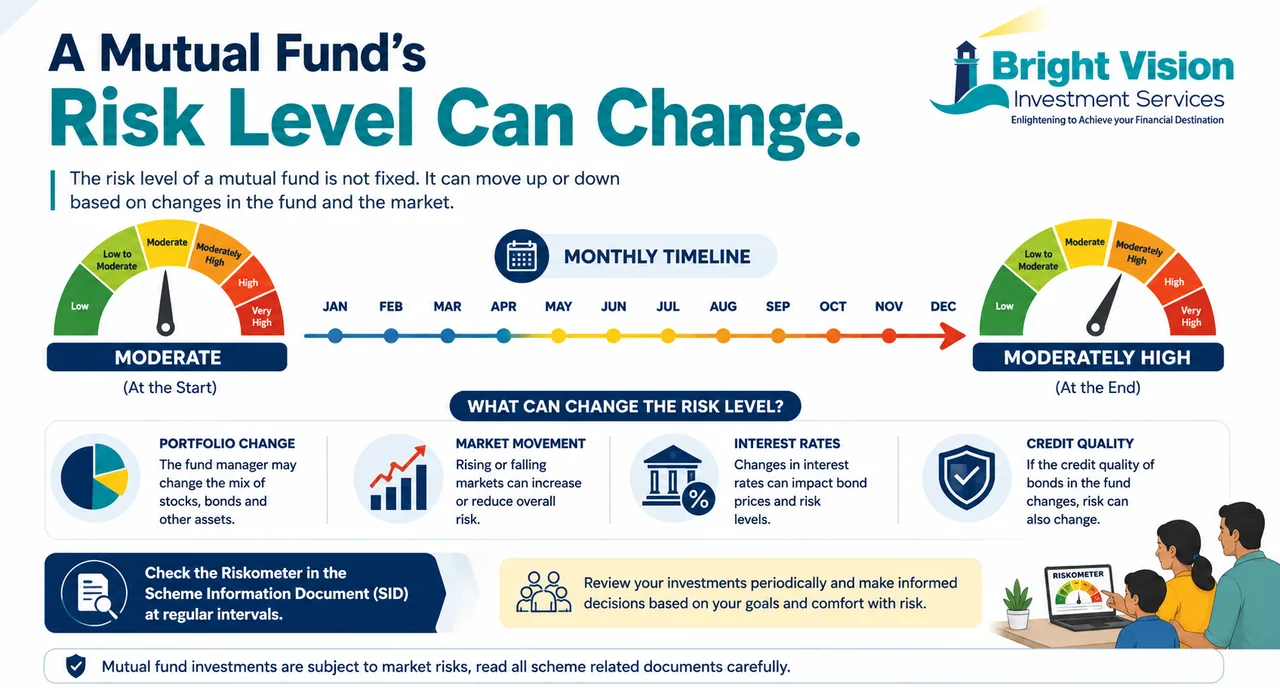
Can the Riskometer of a Mutual Fund Change?
Yes. A mutual fund’s Riskometer can change.
The assets held by a scheme may change over time. Market conditions, credit quality, maturity periods, stock prices and portfolio allocation can also change.
As a result, the scheme’s level of risk may move from one category to another.
For example, a scheme marked “Moderate” earlier may later move to “Moderately High.” This does not always mean something has suddenly gone wrong. It may mean the portfolio or the risk factors connected with it have changed.
Scheme and benchmark Riskometers are generally evaluated using the required periodic portfolio data. Investors can check the latest Riskometer through the mutual fund company’s website, monthly portfolio disclosure, factsheet or scheme documents. SEBI’s rules and disclosures for mutual funds are covered in its Master Circular for Mutual Funds, as updated from time to time.
What Is a Benchmark Riskometer?
You may sometimes see two Riskometers in a mutual fund document:
- The scheme Riskometer
- The benchmark Riskometer
The scheme Riskometer shows the risk level of the mutual fund scheme based on its portfolio.
The benchmark Riskometer shows the risk level linked to the index or benchmark against which the scheme is compared.
Looking at both can give investors more context. If the scheme and its benchmark show different risk levels, investors can examine why the difference exists.
However, the benchmark comparison should not be used alone to make an investment decision.
Riskometer and Your Personal Risk Level Are Different
The Riskometer measures the risk of the mutual fund scheme. It does not measure your personal ability to take risk.
Your personal risk level depends on matters such as:
- Your age
- Your income
- Your regular expenses
- Your debts
- Your family duties
- Your emergency savings
- Your investment goal
- When you need the money
- How you react when markets fall
Imagine two investors looking at the same very-high-risk equity fund.
One investor may be saving for a goal many years away and may be able to accept large market changes. Another investor may need the money within two years for a house payment.
The scheme has the same Riskometer for both investors, but it may not be equally suitable for both.
This is why a Riskometer must always be read together with the investor’s goal, time period and ability to bear a loss.
How Should SIP Investors Use the Riskometer?
A SIP is a way to invest a chosen amount at regular periods. A SIP does not remove the risk of the mutual fund scheme.
If you start a SIP in a very-high-risk fund, your investment remains linked to that very-high-risk scheme. Investing monthly can help create investment discipline, but it does not protect you from market loss.
Before starting a SIP, ask:
- What is the latest Riskometer level?
- What does the scheme invest in?
- How long can I remain invested?
- Can I accept a fall in value?
- Does the scheme match my goal?
- Do I have emergency savings outside this investment?
Do not choose a SIP only because the monthly amount looks affordable. The nature and risk of the underlying scheme matter more.
What Should NRI Investors Check?
NRI investors may have goals in India as well as in their country of residence. They may invest for family needs, retirement, children’s education or future plans in India.
The Riskometer is useful, but NRI investors should also check:
- Whether the scheme accepts investments from their country of residence
- KYC and bank account requirements
- FEMA-related rules
- Tax rules in India
- Tax rules in the country where they live
- Repatriation conditions
- Currency movement between the rupee and foreign currency
- The time period of the goal
Currency changes can affect the value of an investment when measured in another currency. This risk is not fully explained by looking only at the scheme’s Riskometer.
NRI investors should take suitable tax and legal advice for their own situation. Rules may change, and the treatment can differ based on the investor’s country of residence.
What Should HNI and Business Owners Check?
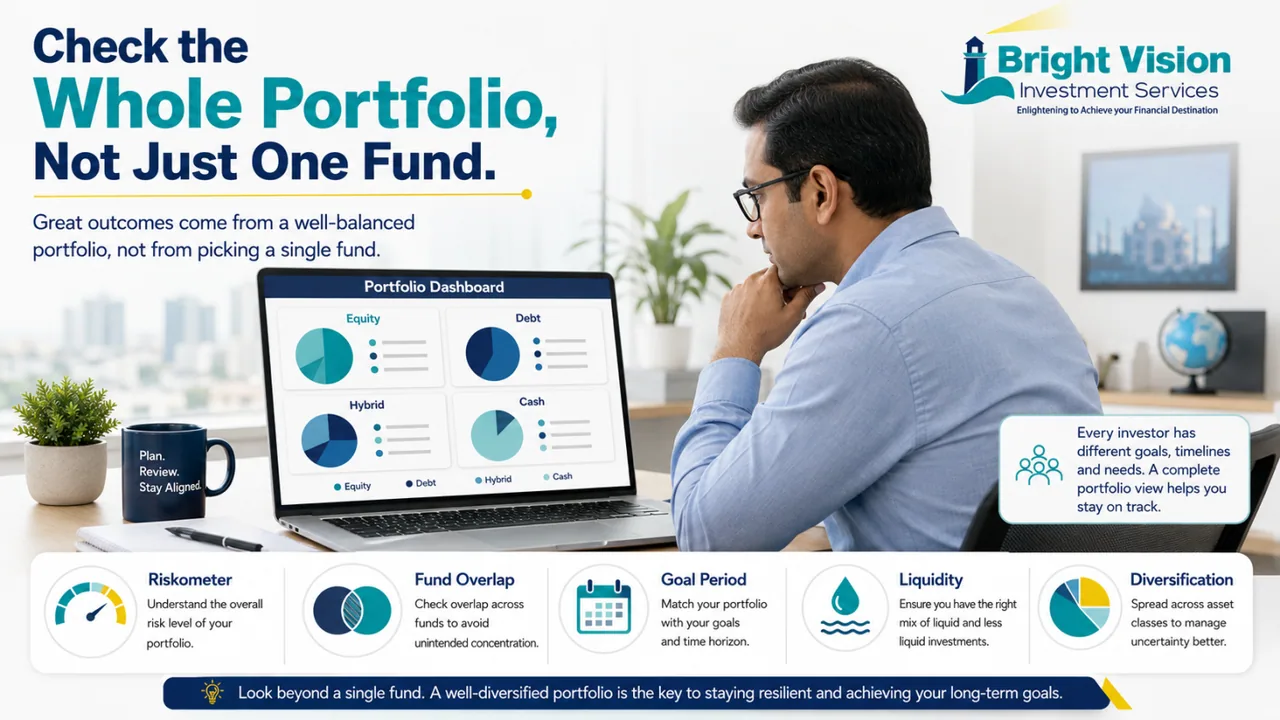
High-net-worth individuals and business owners may hold several mutual fund schemes across different folios and fund houses.
Checking only one scheme’s Riskometer may not show the risk of the full portfolio.
For example, five different schemes may all hold similar stocks or invest in the same sector. The names may be different, but the portfolio may still be heavily concentrated in one area.
A full portfolio review may include:
- The Riskometer of every scheme
- Equity and debt allocation
- Exposure to sectors and company sizes
- Overlap between funds
- Credit quality in debt holdings
- Liquidity needs
- Near-term business cash requirements
- Goal-based allocation
Diversification is not simply owning many schemes. What those schemes hold is more important.
Common Riskometer Mistakes to Avoid
Mistake 1: Thinking low risk means zero risk
Every mutual fund carries some form of risk. Even a low-risk scheme can face changes in value, interest rates, credit conditions or liquidity.
Mistake 2: Linking very high risk with very high returns
The Riskometer does not predict returns. A higher risk label only points to a higher level of risk.
Mistake 3: Checking the Riskometer only once
The Riskometer can change. Review the latest disclosure, especially when reviewing your portfolio or when your financial goal is getting closer.
Mistake 4: Looking only at past returns
Past performance does not show the full risk of a scheme and does not guarantee future results. Read the portfolio, investment objective, Riskometer and scheme documents.
Mistake 5: Choosing the same fund as a friend
Your friend’s income, debts, responsibilities, goal period and ability to accept loss may be different from yours.
Mistake 6: Investing near-term money in a high-risk scheme
Money needed soon should not be placed in a scheme merely because its recent returns look attractive. Match the investment with the goal period and your risk level.
Where Can You Find the Riskometer?
The latest Riskometer may be available in:
- The mutual fund scheme factsheet
- Scheme Information Document
- Key Information Memorandum
- Fund house website
- Monthly portfolio disclosure
- Scheme-related advertisements and product labels
- AMFI-related scheme information
Always check the date of the Riskometer. An old document may not show the scheme’s current level.
A Simple Checklist Before You Invest
Before investing in any mutual fund, take a few minutes to check the following:
- What is the current Riskometer level?
- What assets does the scheme hold?
- What is the investment objective?
- What is the suggested investment period?
- What costs and exit load may apply?
- Does the fund match my financial goal?
- Can I accept a fall in value?
- When will I need this money?
- Is my total portfolio properly spread across assets?
- Have I read the scheme-related documents?
The Riskometer helps you begin the review. It should not be the end of the review.
How Bright Vision Investment Services Can Help
Choosing a mutual fund is not only about finding a scheme with a popular name or strong recent returns. The investment should be considered in relation to your goal, time period, cash needs and ability to accept risk.
Bright Vision Investment Services supports investors in Tamil Nadu, including families, business owners, high-net-worth individuals and NRIs, with mutual fund distribution and goal-based investment support.
The process may include understanding your needs, reviewing your existing mutual fund holdings and explaining available options and their risks. Any investment decision should be made only after reading the relevant scheme documents and considering whether the product is suitable for your situation.
Final Thoughts
The Riskometer makes mutual fund risk easier to see, but it should never be treated as a return meter.
“Low Risk” does not mean your money is guaranteed. “Very High Risk” does not mean very high returns are assured. Each level only shows the broad degree of risk linked to the scheme.
Before starting a SIP or making a lump-sum investment, check the latest Riskometer, understand the portfolio, review your financial goal and read all scheme-related documents carefully.
A few minutes spent understanding risk before investing can help you make a more informed decision.
Frequently Asked Questions
Is the Riskometer mandatory for mutual funds in India?
Yes. SEBI requires mutual fund schemes to display the applicable Riskometer so that investors can see the scheme’s risk level.
Is a low-risk mutual fund completely safe?
No. “Low Risk” means the scheme has a lower level of risk compared with the other Riskometer categories. It does not mean the investment is risk-free or guaranteed.
Can a mutual fund’s Riskometer change?
Yes. It can change when the scheme’s portfolio or related risk factors change. Investors should check the latest disclosure.
Does a SIP reduce the Riskometer level?
No. A SIP is only a method of investing regularly. The risk level depends on the mutual fund scheme selected.
Does very high risk mean very high returns?
No. A very-high-risk label does not promise any level of return. It means that the investment can face a very high level of risk and large changes in value.
Should I choose a mutual fund based only on the Riskometer?
No. Also consider the investment objective, portfolio, goal period, costs, liquidity needs, tax position and your ability to accept risk.
Disclaimer
This article is for general educational and awareness purposes only. It should not be treated as investment, tax or legal advice, an offer, or a recommendation to invest in any mutual fund scheme. The suitability of an investment depends on each investor’s goals, financial position, time period and ability to bear risk. Investors should read all scheme-related documents carefully and seek appropriate professional guidance where required.
Mutual Fund investments are subject to market risks, read all scheme related documents carefully.
Explore more perspectives or talk to Bright Vision about your financial goals.
Explore all insights