
Originally published 5 October 2025. This educational article reflects its publication date; check current rules and suitability before taking action.
Are you an NRI from Chennai, working hard abroad, with dreams of a secure financial future back home?
You're not alone. Thousands of Non-Resident Indians (NRIs) pour their sweat and savings into building a life in foreign lands, all while keeping a fond eye on their roots in India. The dream? To see that hard-earned money grow, secure a comfortable life for family, and perhaps even pave the way for a grand return to our vibrant Chennai.
But here's a crucial question: Is your Indian money truly working as hard for you as you've worked for it?
Often, in the rush of life abroad, we make common investment missteps that can quietly erode our wealth, or worse, leave us far from our financial goals. As someone who has guided countless NRIs through the nuances of Indian investments, I've seen these patterns repeat.
Let's dive into the Top 3 Biggest Mistakes NRIs from Chennai (and all over the world) make with their Indian investments, and more importantly, how you can easily fix them to put your financial future on the fast track!

Mistake #1: The "FD is King" Fallacy – Sticking Solely to Fixed Deposits
Ask most NRIs where their Indian savings are, and a common answer will be: "Fixed Deposits (FDs)!" And why not? FDs are simple, safe, and offer predictable returns. Our parents and grandparents swore by them. They feel like a warm, familiar blanket.
But here's the cold, hard truth: While FDs offer safety, they often barely beat, or sometimes even fall behind, inflation.
Think of it this way: If your FD gives you 6-7% interest, but the cost of living (inflation) in Chennai is rising by 5-6% each year, your "real" return (what your money can actually buy) is tiny! You're working hard, but your money isn't working hard enough.
Why is this a mistake for NRIs?
- Inflation Erosion: Your purchasing power diminishes over time. That plot of land in ECR or that apartment in Anna Nagar you dream of buying will get more expensive faster than your FD grows.
- Missed Growth Opportunity: India is one of the fastest-growing major economies in the world! By sticking to FDs, you're missing out on the incredible growth potential of the Indian stock market and mutual funds. It's like having a ticket to a grand feast but choosing to stay outside.
- Tax Inefficiency (NRO FDs): While NRE FDs are tax-free in India, NRO FDs are subject to TDS (Tax Deducted at Source), further eating into your already modest returns.
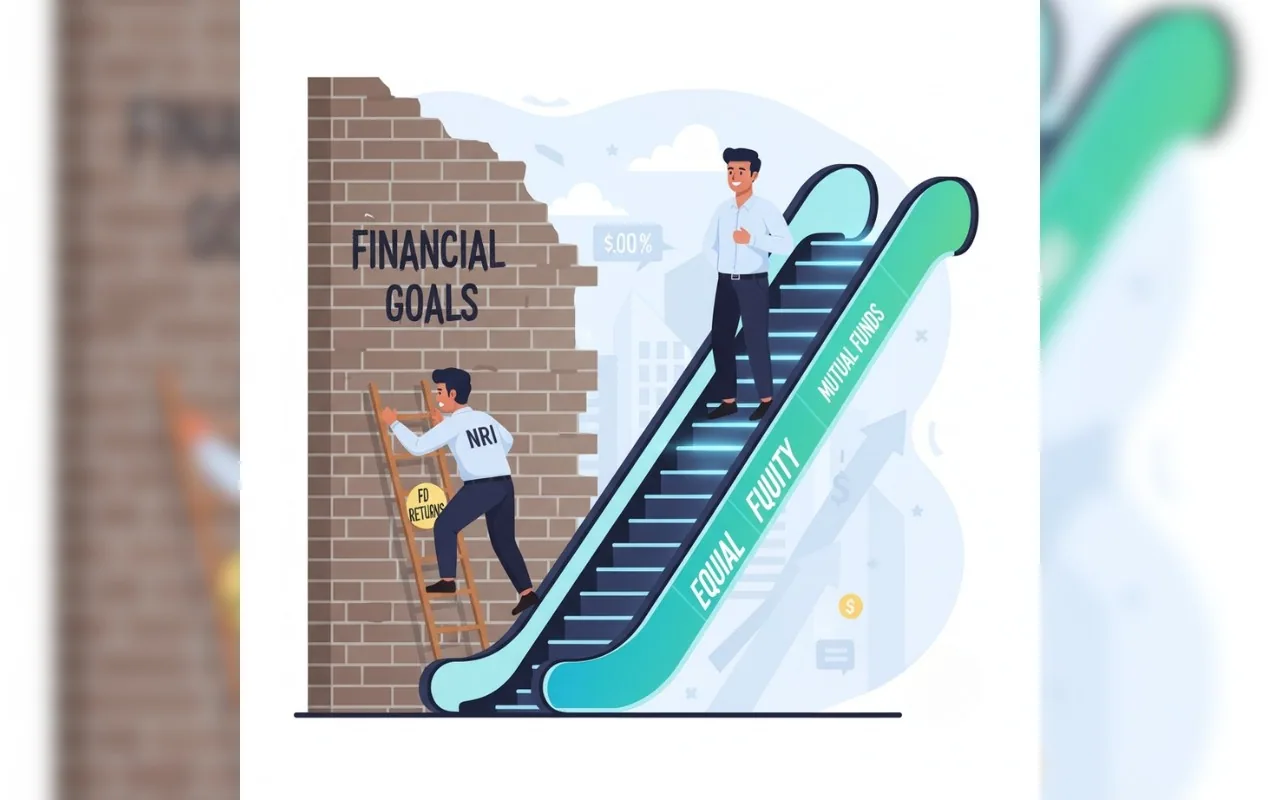
How to Fix It: Embrace the Power of Diversification (Think Beyond FDs!)
The solution isn't to abandon FDs entirely, but to see them as one part of a bigger, smarter strategy.
- Introduce Mutual Funds: These are professionally managed funds that invest in a basket of stocks, bonds, or other assets. Think of it as pooling your money with many others, and an expert fund manager (like a financial captain) steers the ship, aiming for better returns than a standalone FD.
- Systematic Investment Plans (SIPs): This is your best friend! Instead of a lump sum, invest a fixed amount regularly (e.g., ₹10,000 every month). This averages out your buying cost and instills discipline. Imagine buying a little bit of India's growth, consistently, month after month.
- Consult an Expert: A qualified financial advisor who understands NRI regulations can help you build a diversified portfolio that balances risk and return, perfectly tailored to your goals.
Mistake #2: Ignoring Tax Laws & Repatriation Rules – The Costly Oversights
"Tax? Repatriation? Oh, it's so confusing!" This is a common sentiment, and it leads to the second biggest mistake: not understanding the specific tax and foreign exchange regulations that apply to NRIs. This isn't just about paying more tax than you need to; it can also hinder your ability to bring your money back home when you need it!
Why is this a mistake for NRIs?
- Paying More Tax: Ignorance of DTAA (Double Taxation Avoidance Agreement) between India and your country of residence can mean you pay tax on the same income twice! Or, not knowing about tax-efficient investment vehicles can lead to higher tax outgo in India.
- Repatriation Headaches: Imagine you've made a great return, but now you want to bring that money back to your foreign bank account for a down payment or business. If you've invested through the wrong accounts or structures, you might face restrictions or delays. It's like having a treasure map but no key to the chest!
- Compliance Risks: The Indian financial system, governed by FEMA (Foreign Exchange Management Act) and RBI guidelines, has specific rules for NRIs. Not following them, even unknowingly, can lead to complications.
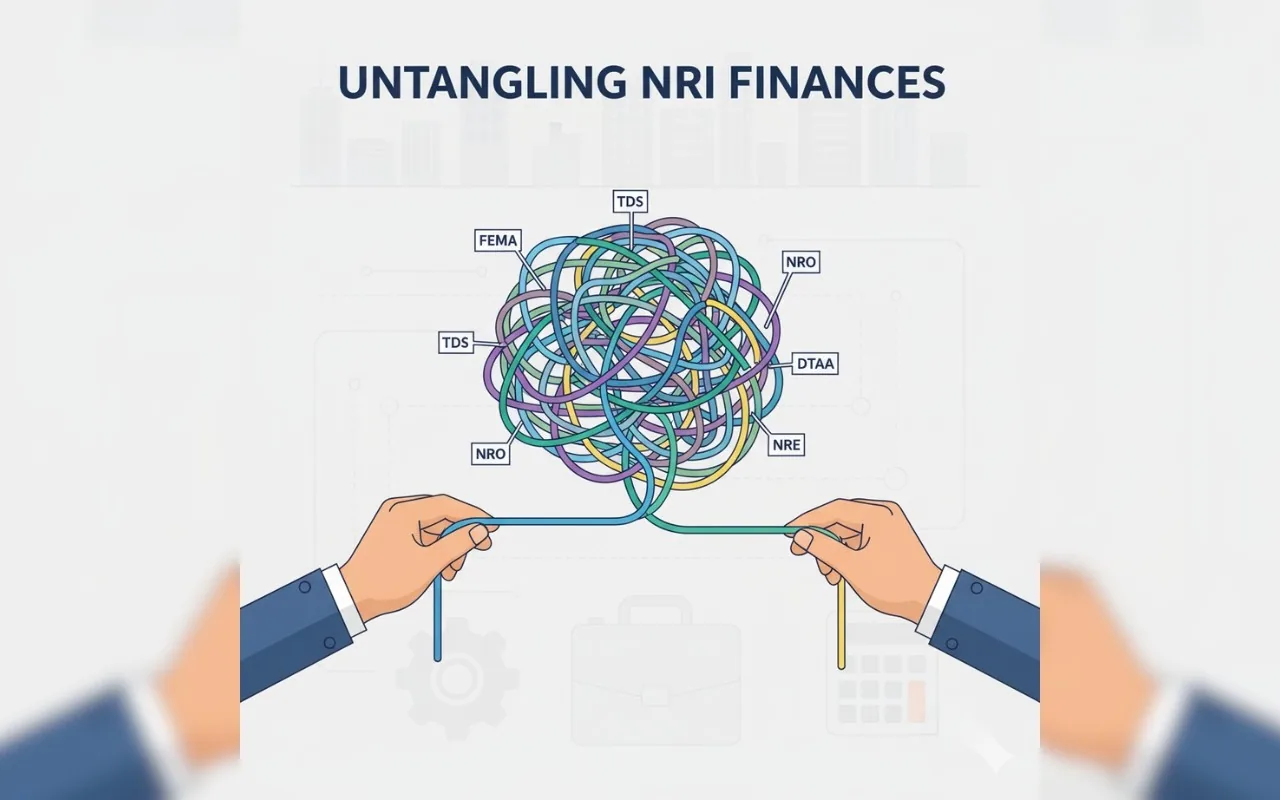
How to Fix It: Get Smart on Rules & Seek Professional Guidance
Navigating the tax and repatriation maze doesn't have to be a nightmare. With the right knowledge and support, it becomes straightforward.
- Understand NRE vs. NRO Accounts:
- Leverage DTAA (Double Taxation Avoidance Agreement): If your country has a DTAA with India, you can often claim tax relief to avoid paying tax on the same income twice. This requires proper documentation and understanding.
- TDS (Tax Deducted at Source): Understand when TDS applies (e.g., on NRO FD interest, capital gains from certain investments). You can often apply for a lower TDS or claim a refund when filing your Indian tax returns.
- Engage an NRI-Focused Advisor: This is where a good financial advisor truly earns their keep. They can guide you through the intricacies of FEMA, DTAA, and help you structure your investments in the most tax-efficient and repatriation-friendly way. Think of them as your personal compass in the financial jungle.
Mistake #3: Emotional Investing & Lack of a Clear Financial Plan – The "Hope and Pray" Strategy
We've all been there: seeing a friend brag about a "hot stock" or hearing about some incredible real estate deal in a WhatsApp group. It's tempting to jump in, driven by fear of missing out (FOMO) or the desire for quick riches. This leads to the third major mistake: investing based on emotions or without a clear, written financial plan.
Why is this a mistake for NRIs?
- Chasing Returns (Bad Timing): Buying high and selling low is a classic mistake. Emotional investing often means jumping into something when it's already boomed and exiting when it dips – precisely the opposite of what smart investing requires.
- No Clear Goals: Without specific goals (e.g., "₹5 crore for retirement by 55," "₹1 crore for child's education in 10 years"), your investments are like a ship without a rudder. You drift aimlessly and likely won't reach your desired destination.
- Ignoring Risk Tolerance: Are you comfortable with big ups and downs (high risk) or do you prefer steady, modest growth (low risk)? Investing in something too risky for your comfort level can lead to panic selling at the wrong time.
- Blindly Following Advice: Friends and family mean well, but their financial situation, goals, and risk tolerance are different from yours. What works for them might be disastrous for you.
I
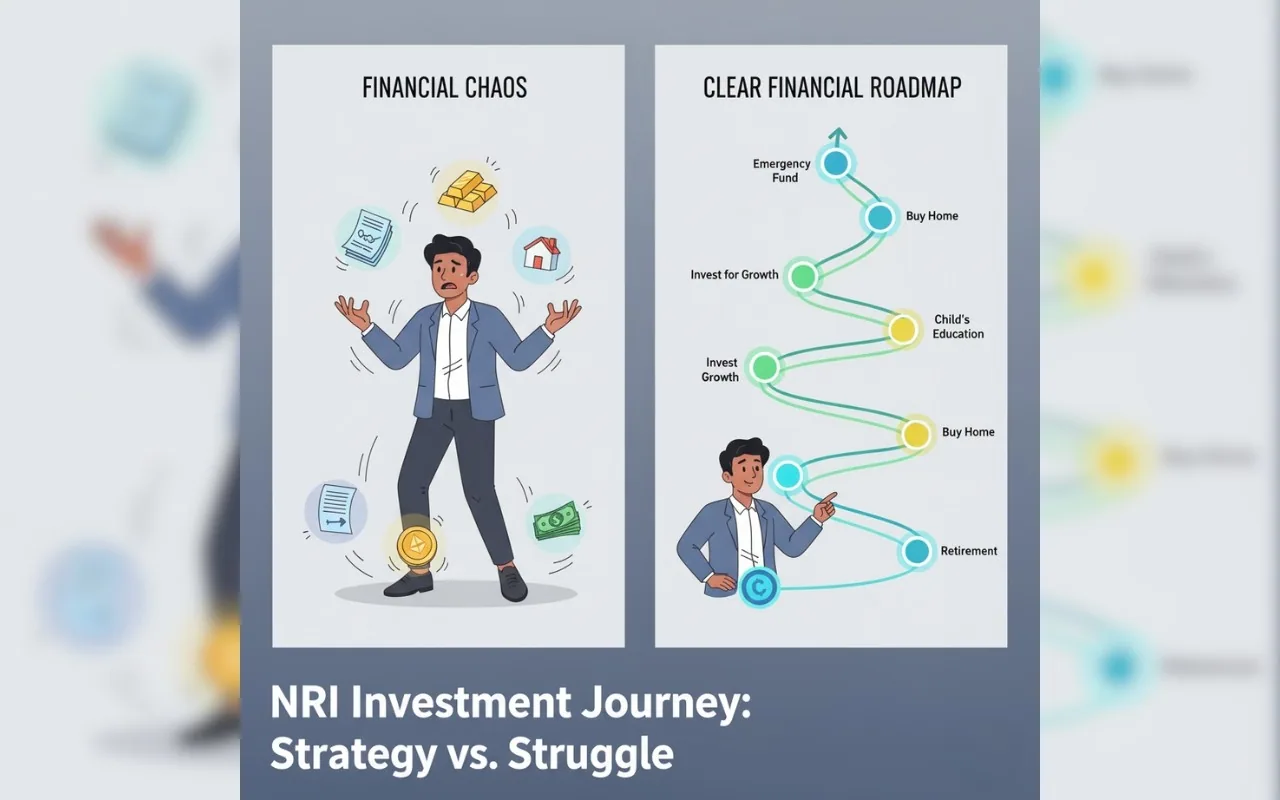
How to Fix It: Develop a Solid Financial Plan & Stick to It (with Professional Help!)
This is perhaps the most critical fix because it underpins everything else. A well-thought-out financial plan acts as your investment blueprint and emotional shock absorber.
- Define Your Goals (SMART Goals):
- Assess Your Risk Tolerance: Be honest with yourself. How much fluctuation can you stomach without losing sleep? This will determine the right mix of equity, debt, and other assets in your portfolio.
- Create an Asset Allocation Strategy: Based on your goals and risk tolerance, decide how much to put into different asset classes (e.g., 60% equity mutual funds, 30% debt mutual funds, 10% gold/other). This is your strategic allocation.
- Regular Portfolio Reviews: Life changes, goals evolve. Review your portfolio at least once a year with your advisor to ensure it's still aligned with your plan.
- Avoid Market Noise: Ignore daily market ups and downs. Focus on your long-term plan. Remember, successful investing is a marathon, not a sprint.
Your Chennai Dreams Deserve a Bright Future!
You've worked incredibly hard to earn your wealth. Don't let these common investment mistakes hinder your path to financial freedom and the fulfillment of your dreams back home in Chennai.
By moving beyond the "FD-only" mindset, understanding the crucial tax and repatriation rules, and building a solid, goal-oriented financial plan, you can transform your investment journey from confusing to confident.
Ready to take control of your Indian investments and ensure they align perfectly with your ambitions?

Don't navigate this journey alone!
As an expert dedicated to NRI financial well-being, I specialize in helping individuals like you simplify Indian investments, optimize returns, and build a truly resilient portfolio.
Take the first step towards a brighter financial future today!
Contact us to schedule a FREE, no-obligation consultation with a seasoned expert who understands your unique NRI challenges and aspirations. Let's make your Indian wealth work smarter for you.
Explore more perspectives or talk to Bright Vision about your financial goals.
Explore all insights